
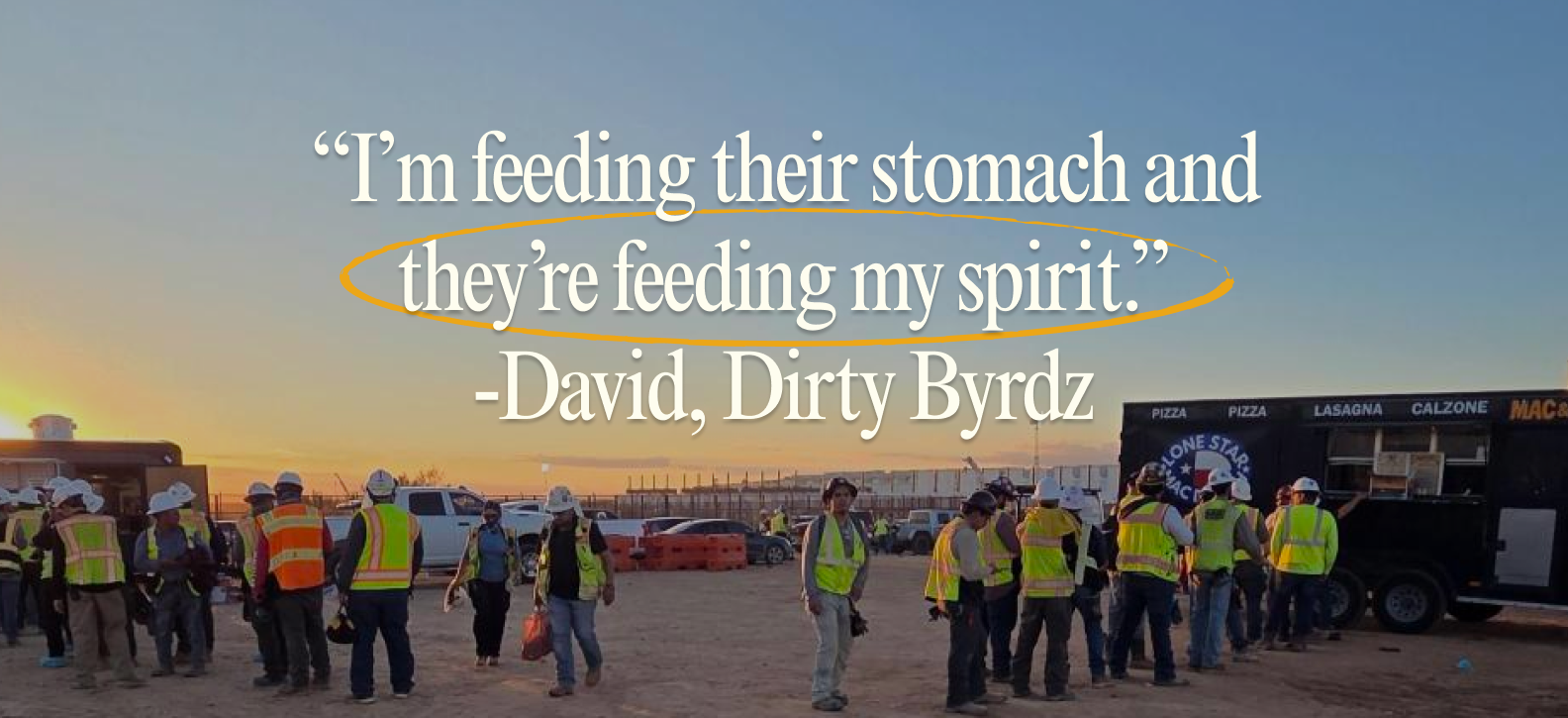
David Thomas, owner of Dirty Byrdz, knows what it’s like to work miles from the nearest meal. Before opening his food truck, he worked in the Texas oil fields, where passing a certain point meant leaving food options behind. Now, he’s the familiar face at the window, offering workers a hot meal, a joke, and a reason to look forward to their break.
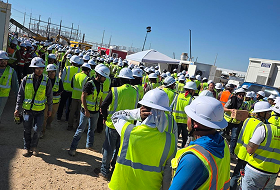
At major construction sites in rural Texas, those moments matter. Many workers are far from their families, living in hotels without kitchens. Since late July, more than 30 of Food Fleet’s culinary partners have been feeding roughly 1,800 workers at each remote location from breakfast through the graveyard shift, bringing meals and connection around the clock.
Behind every window is a team whose work begins hours before the first plate goes out.
For La Cabaña’s Azucena Vega and her family, the workday starts at their restaurant at 1AM. They cook eggs, meats, and pancakes, load the truck, and leave by 3AM for the 35-minute drive. Workers begin arriving around 4:45 or 5AM.
After breakfast, while the counters are dry and replenishments are checked in, lunch is prepped, cooked, and served. By the time they head back to the restaurant, unload, and finish cleaning, it is around 2:30PM. A full day runs more than 13 hours.
The pace demands preparation on a different scale. Charre’s Catering makes hundreds of breakfast burritos before switching to traditional Mexican dishes for more than 300 lunch guests. At BYOB, owner Blake Dunn says his team typically serves 200 to 300 workers in 15 to 30 minutes, depending on the meal.
For David of Dirty Byrdz, the experience of feeding workers in such a remote location has fundamentally changed his team. He calls the project a “food truck boot camp.” After serving hundreds of plates in a single shift, his crew now sees a long guest line as manageable rather than intimidating. But volume isn’t the only thing building his employees’ confidence; so are the relationships they’re forming in the field.
Returning day after day has turned customers into people the partners know by name. At Charre’s Catering, workers say the traditional Mexican dishes remind them of meals their mothers made. Owner Denise Charre’s mother hears “Buenos días, ma” and “Thank you, ma” across the window. David describes the encouragement as mutual: while he tries to brighten workers’ days, their appreciation helps keep him going, too.
That daily connection also comes with a level of consistency that can change a small business’s future.
For Azucena, a reliable schedule has allowed her to offer that same stability to her team by hiring more people and giving existing employees the additional hours they had been asking for. Adriana Amador of Adri’s Kitchen has purchased a larger trailer, giving her room to prepare more food and take on bigger opportunities.
For Blake, the difference reaches beyond the business. He says the work has helped his team move from living paycheck to paycheck toward earning a livable wage. He has started his children’s college fund, and opening a restaurant someday now feels possible.

Still, one of his proudest moments came when an overnight supervisor shook his hand and thanked him for feeding the crew.
“Businesses are often made just to make money, but it’s those interactions and moments that make every meal served worth it,” Blake says.
While construction crews build what comes next, the businesses feeding them are building futures of their own.